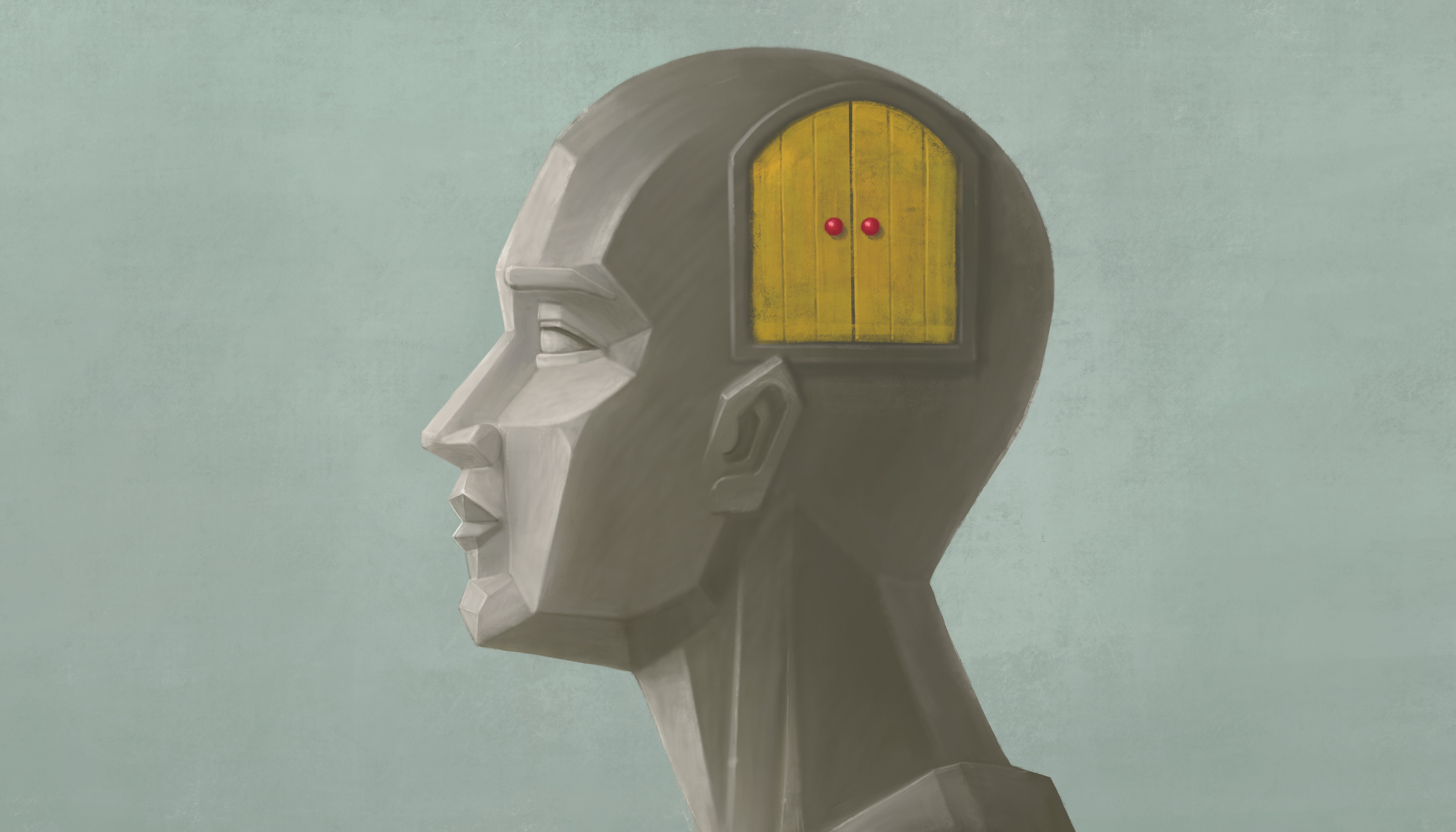
It’s the aha moment, the stirring from your gut to your brain that powers the thinking behind consumer insights. Every time a person interacts with any business and product, there’s an insight waiting to be brought to the surface.
Consumer insights are observations - either found in qualitative data from surveys or light bulb moments during a casual conversation - that are used to direct businesses on how to be more relevant and connected to their audiences. At their core, these insights involve synthesizing vast quantities of behavioral data, qualitative feedback, and market signals.
Typically, the strategist will gather thoughts, opinions, and experiences shared by the people and use them for the people. These insights are the unspoken truths people keep internally, consciously or not. And when a brand brings those truths to light, they become a brand that makes consumers say, “they get me.”
Since the Mad Men era of understanding consumer behavior, finding insights has dramatically changed. The 1960s advertising methods for understanding customers uncovered bold ways of thinking as those methods were formulated all within the realm of psychology and social aspiration. This is when products started to be sold by the emotional fulfillment, social status, and identity it gives the customer. And advertisers knew consumers often did not logically know why they bought things, so they sold through theories like the:
- Hierarchy of Needs
- Promise of Happiness
- Lifestyle Advertising
- Power of Association
Today, identifying fundamental human truths has become increasingly challenging. Now in the AI era, those unspoken truths are more and more exposed, and strategists feel they must venture to the darkest caves of microcommunities to unearth these insights.
Well, strategists, you can exit the cave. Because the blueprint for consumer behavior remains the same. Strip away the jargon, the dashboards, and the digital glitter, and it’s still the same equation to formulate an insight: find a human truth, pair it with a brand truth, and turn it into a creative idea that moves people. The heartbeat of strategy hasn’t changed in 70 years. But the world around it is, in fact, changing. The volume, velocity, and variety of available data have changed fundamentally in the last 20 years with social media, the last 10 years with mobile apps created for nearly any service, and the last 5 years with the viral launch of AI.
The Role of AI for Strategic Planning
The truth is, we’re living in the age of AI. And not even unspoken human truths can escape it. Algorithms, primarily leveraging Natural Language Processing and deep learning models, can rapidly ingest unstructured data, perform sophisticated sentiment analysis, and execute multidimensional clustering of consumer opinions before your second cup of coffee. For a strategist, that’s a gift, but it can also be a trap. While mentioning the use of AI in consumer insights might seem counterproductive, the use of AI for strategic planning can be helpful.
AI’s role is to handle the massive data flow, freeing the human strategist to focus on interpretation, empathy, and the creative leap that turns facts into insights.
When a Strategist Uses AI, and When They Don’t
How AI Empowers the Human-Led Strategist
For human-led strategy, AI is a tool for:
Fact-Finding at Scale: AI can execute rapid pattern recognition, helping us find facts faster and widen our lens on what consumers think, want, fear, or love across billions of data points. It helps strategists see how products perform, how brands are perceived, and how market dynamics are shifting.
Efficiency and Precision: AI is a relentlessly efficient research assistant. It refines the raw data and identifies the signals (facts, trends, complaints) that the strategist must then examine to ask the deeper human questions, such as, “Why are they complaining about this specific thing?”
Countering Fragmentation: AI helps cluster consumer opinions and surface niche micro-communities that traditional research might miss, assisting the strategist in finding fundamental human truths in a world where shared consumer experiences have fractured.
But there’s a line we can’t cross. AI should inform insights, not invent them.
The Point When a Strategist Stops Using AI
AI doesn’t create, it aggregates and models probabilities. It connects dots that already exist based on statistical correlations, but it doesn’t feel the spark when those dots form something profoundly human.
As humans, we think through a dynamic duo of thought processing: convergent vs. divergent thinking. Convergent thinking is the analytical process of logically combining observations or clues to narrow down options and reach the point of making a decision. AI can do that when prompted clearly, and it saves the strategist time, energy and from missed connections.
But AI can’t find insights, because insights aren’t found. They are created by human curiosity, intuition, and imagination. Looking at the data and not seeing just numbers, but meaning. This is when convergent thinking switches to divergent thinking: when our thinking shifts from “yes, and…” to “no, but…” Within a lot of teams today in any industry, AI is killing our divergent thinking - this is when the strategist stops using AI, and turns to their own gut feeling, idea-flowing process.
Consumer insights are not scraped from a surface-level report; they are shaped by human-led strategy. They’re a product of human empathy, of someone looking at the same pile of data and not seeing numbers, but meaning. It sounds simple, but it’s hard to get it right.
We live in a world drowning in data-driven metrics, but starving for insight. The rise of the internet, social media, and AI has constantly put data in front of our eyes. But it all means nothing if no one can decipher it and transform it into meaning, purpose, or idea.
Data is the what. Insight is the why. Data gives us answers. Insights provide us with direction and actionable frameworks for the future of brands, culture and audiences. Strategists have always been at their best when they ask great questions - of the consumer, the brand, and the world around them. AI is simply another source to ask those questions. A vast, collective mind of human input, but it’s still a strategist’s job to listen, synthesize, and translate. Understanding its limitations leads to good AI work. Because no matter how smart the tools get, real strategy still begins, and ends, with humanity and human-led strategy.
And that - thankfully - can’t be automated.