
OpenAI significantly updated its U.S. privacy policy on April 30, 2026, to include language that authorizes the use of marketing cookies and the sharing of user data with third-party marketing partners to promote OpenAI products. While OpenAI maintains that user conversations are not shared with advertisers, the update formalizes a broader advertising infrastructure around ChatGPT users.
What OpenAI Is Collecting
According to OpenAI and reporting surrounding the policy update, OpenAI states it is not selling conversations or giving advertisers access to individual chats. However, the company is now collecting and utilizing:
- Cookie IDs
- Device identifiers
- Usage behavior
- Engagement signals
- Ad interaction data
- Potential purchase/conversion data from advertisers and partners
This creates a foundational advertising graph around user behavior, even if the actual chat content remains private.
Why This Matters for Advertisers
The long-term implication is that ChatGPT could become one of the most commercially valuable intent platforms ever created.
Traditional advertising platforms infer intent indirectly:
- Google interprets search queries
- Meta predicts interests from behavior
- TikTok predicts affinity from engagement patterns
ChatGPT, however, receives direct conversational intent:
- purchase research
- travel planning
- financial questions
- healthcare inquiries
- product comparisons
- business software evaluations
- educational exploration
Users are voluntarily disclosing context, preferences, needs, frustrations, and purchase motivations in natural language.
Even if OpenAI never directly monetizes raw conversation content, the surrounding behavioral and contextual signals are extraordinarily valuable for advertising optimization and audience modeling.
The Future of AI Advertising
OpenAI has already begun testing ads inside ChatGPT for certain free-tier users in the U.S., with ads described as:
- clearly labeled
- separated from answers
- contextually relevant
- optionally personalized
But the bigger future implication is not simply “display ads inside AI.”
It is the emergence of conversational commerce and conversational media.
Potential future advertising models could include:
- sponsored recommendations
- AI-assisted product placements
- conversational shopping journeys
- dynamic sponsored answers
- affiliate commerce integrations
- personalized brand suggestions
- AI media buying based on conversational intent
- real-time audience modeling from prompt behavior
This would fundamentally reshape performance marketing because AI interfaces sit closer to decision-making than traditional media channels.
The Trust Challenge
ChatGPT’s value is rooted in trust and perceived objectivity. If advertising becomes too invasive or begins influencing recommendations, OpenAI risks damaging the credibility that made the platform successful in the first place.
OpenAI has repeatedly emphasized that:
- ads will not influence answers
- conversations are not sold to advertisers
- users can control personalization settings
However, history suggests monetization pressure tends to expand over time as platforms mature.
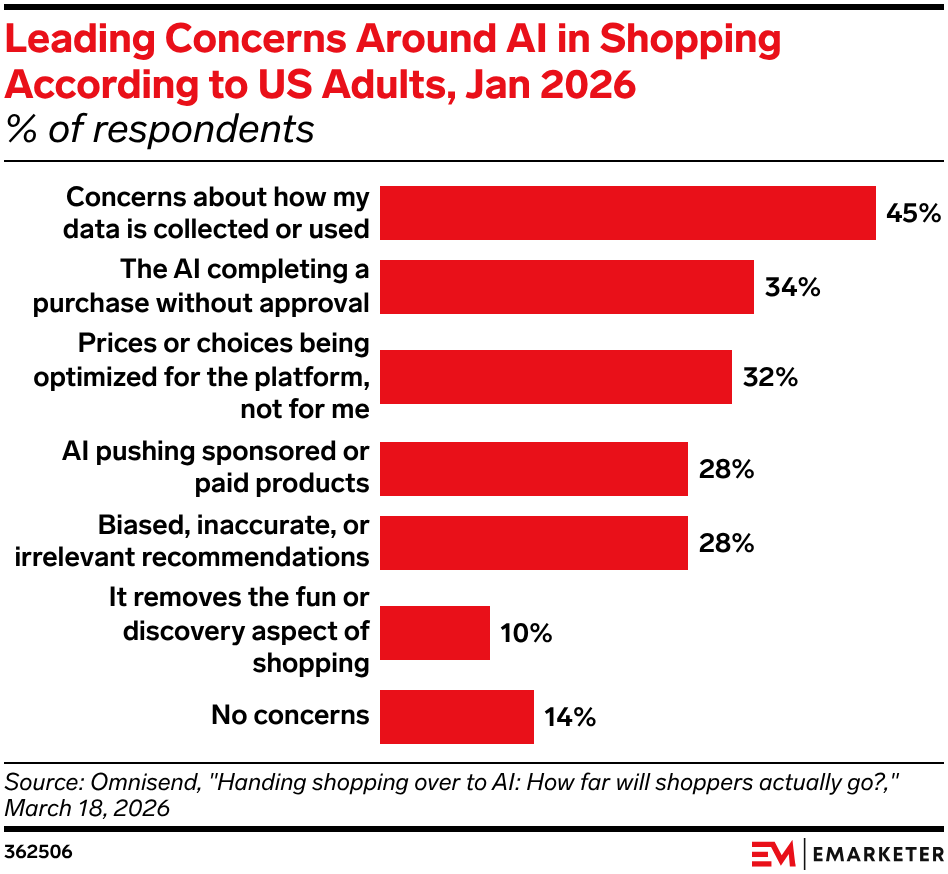
This new announcement comes on the heels of a new survey that was released from Omnisend that shows 45% of adults are “concerned about how my data is collected or used” surrounding AI in Shopping. This highlights that consumers are wary of the introduction of AI in their purchase decisions. This has the potential to exploit and influence consumers’ decisions in passive and unrecognizable ways.
This highlights the necessity for AI platforms to maintain trust while monetizing intent.
Closing Thoughts
The April 30 privacy update may look incremental on the surface, but strategically it marks the early infrastructure buildout of AI-native advertising. The companies that learn how conversational intent, AI discovery, and recommendation systems influence consumer behavior today will have a significant advantage as AI evolves from a utility into a full-scale media channel.
Vladimir Jones is committed to vetting and experimenting with new media channels as technology, consumer preferences and data continue to evolve. Our first priority is to drive our clients’ brand, message and product/service forward to cement their legacy among their core customers. We will continue to monitor and provide updates on the integration and evolution of AI in media and advertising.